Why Restaurant Menu Control Matters in Online Ordering
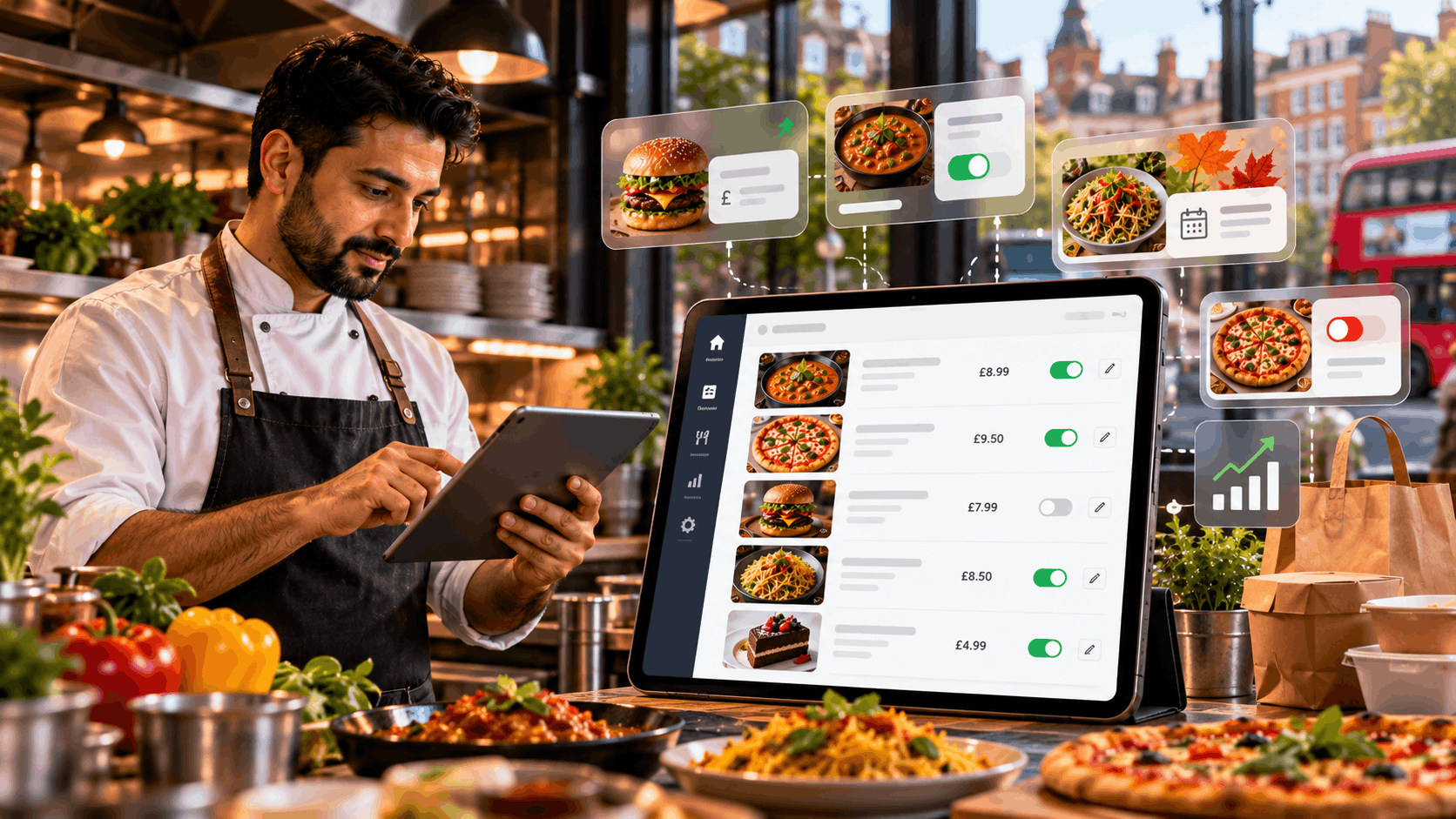
For modern restaurants, the online menu is no longer just a digital version of a printed menu. It is an important part of the customer journey, restaurant branding and online ordering experience. Customers searching for restaurants near me, food delivery near me, Hounslow restaurants, Hounslow takeaway or online food ordering want accurate menus, clear prices and easy ordering options. An online food ordering platform for UK restaurants can help restaurants present their menus digitally while giving them greater control over the information customers see. Explore HYST's online restaurant ordering platform
For independent restaurants, cafés, takeaways and food businesses, restaurant menu control has become increasingly important. A restaurant's menu can change every day. Prices may change, dishes may sell out, new products may be introduced and opening hours may vary.
If a restaurant cannot update its online menu quickly, customers may see outdated information.
That can lead to:
- Customer confusion
- Incorrect orders
- Unavailable food being ordered
- Pricing disputes
- Poor customer experience
- Abandoned baskets
- Negative reviews
- Lost repeat customers
For this reason, online menu management should be considered an essential part of modern restaurant technology.
What Is Restaurant Menu Control?
Restaurant menu control means having the ability to manage the information customers see on an online restaurant menu.
This can include:
- Menu categories
- Food names
- Food descriptions
- Prices
- Food images
- Sizes
- Variations
- Add-ons
- Toppings
- Dietary information
- Availability
- Opening hours
- Delivery options
- Collection options
A restaurant with strong digital menu management can keep this information updated as its business changes.
For example, if a restaurant sells out of a popular curry on Friday evening, the owner should be able to mark the dish unavailable rather than allowing customers to continue ordering it.
Likewise, if the restaurant introduces a new dessert, it should be possible to add it to the digital menu without waiting for a new printed menu.
HYST currently states that participating restaurant partners have control over menu items, pricing and availability, with updates possible through the platform. See HYST's restaurant FAQs
Why Menu Control Matters for Online Restaurants
The online menu is often one of the first things a potential customer sees.
A customer may discover a restaurant through:
- Google Search
- Google Maps
- Restaurant directories
- Local SEO
- Food ordering platforms
- Word-of-mouth recommendations
- Local food blogs
After discovering the restaurant, the customer may immediately look for the menu.
This creates a very important transition:
Restaurant Discovery → Menu → Food Selection → Online Order
If the menu is inaccurate or difficult to use, the customer may never reach the final step.
That is why restaurant menu control is directly connected to the online ordering experience.
1. Accurate Menu Information Builds Customer Trust
Customers want to know exactly what they are ordering.
An online restaurant menu should provide accurate information about:
- Food items
- Prices
- Ingredients
- Portion sizes
- Options
- Add-ons
- Availability
Imagine a customer finds a restaurant online and sees a dish priced at £10.
They add it to their basket, but the checkout price is suddenly different.
That can create frustration.
Similarly, if a customer orders a dish that is no longer available, they may have a poor experience even if the restaurant has excellent food.
Accurate menu information builds confidence.
For online food ordering, trust is extremely important because customers cannot physically see the food before placing their order.
2. Price Control Is a Major Part of Menu Management
One of the most important aspects of restaurant menu control is price management.
Food businesses need to adjust prices for many reasons.
Ingredient costs may increase.
Portion sizes may change.
A restaurant may introduce premium ingredients.
A new supplier may offer different pricing.
A restaurant may create a new meal combination.
Because of these changes, restaurants need the ability to update their online menu prices.
Customers also expect pricing to be transparent.
They want to understand:
- How much each dish costs
- What comes with the dish
- How much extras cost
- Whether delivery charges apply
- What the final order total will be
HYST currently states that restaurants manage their own menu prices and that the platform displays their genuine menu pricing without additional menu markups. Learn more about HYST menu and pricing control
Restaurants should still review the commercial terms that apply to their individual platform agreement.
3. Menu Availability Needs to Be Updated Quickly
One of the biggest problems with online restaurant menus is outdated availability.
Restaurants can sell out of popular dishes, especially during busy periods.
For example:
Friday evening → High demand → Popular dish sells out
If the restaurant cannot update the digital menu, customers may continue ordering the unavailable item.
This creates unnecessary operational problems.
The restaurant may need to:
- Contact the customer
- Offer a replacement
- Refund the item
- Delay the order
- Cancel part of the order
A better solution is to update availability as soon as possible.
This is why real-time menu availability is an important feature for modern restaurant ordering systems.
4. Menu Control Helps Restaurants Manage Seasonal Food
Restaurant menus are not always permanent.
Businesses may offer:
- Summer menus
- Winter menus
- Christmas menus
- Ramadan specials
- Valentine's Day meals
- Easter products
- Weekend specials
- Seasonal desserts
- Limited-time dishes
A digital menu makes it easier to introduce and remove these items.
For example, a restaurant could add a limited-time Christmas meal and remove it when the promotion ends.
This creates greater flexibility compared with relying entirely on printed menus.
5. Digital Menu Control Supports Food Customisation
Many modern restaurant orders include customisation.
Customers may want:
- Extra cheese
- No onions
- Extra sauce
- Different toppings
- Mild spice
- Medium spice
- Hot spice
- Additional sides
- Larger portions
- Different drink options
A well-managed online menu can make these options easier to understand.
For restaurants, this can also reduce confusion because customers can select their preferences during the ordering process.
Instead of writing unclear notes or calling the restaurant, customers can choose available options directly.
6. Menu Control Helps Restaurants Present Their Brand
A restaurant menu is also a branding tool.
The way dishes are presented can influence how customers perceive the business.
A restaurant can use:
- High-quality food images
- Professional descriptions
- Consistent naming
- Clear categories
- Brand colours
- Signature dishes
- Recommended items
A well-designed digital restaurant menu can make a small independent restaurant look more professional online.
This can be especially valuable for:
- Indian restaurants
- Pakistani restaurants
- Bangladeshi restaurants
- Italian restaurants
- Pizza restaurants
- Burger restaurants
- Chinese restaurants
- Cafés
- Dessert shops
- Takeaways
7. Restaurant Menu Control Improves the Mobile Ordering Experience
Many customers browse restaurant menus using smartphones.
This means the online menu should work well on mobile devices.
Customers should be able to:
Open → Browse → Select → Customise → Add to basket → Checkout
without unnecessary complications.
A mobile-friendly menu should have:
- Clear categories
- Readable text
- Visible prices
- Good-quality images
- Simple buttons
- Easy navigation
- Fast loading
- Clear availability
If customers struggle to use the menu on mobile, they may leave before completing an order.
8. Menu Management Can Reduce Ordering Errors
Incorrect menu information can lead to incorrect orders.
For example:
A restaurant changes its burger ingredients but forgets to update the online description.
The customer orders based on the old information.
The restaurant prepares the new version.
The customer receives something different from what they expected.
This can result in:
- Complaints
- Refund requests
- Negative reviews
- Customer dissatisfaction
Keeping menu information updated can reduce these problems.
Restaurant menu control therefore has an operational benefit as well as a marketing benefit.
9. Clear Menu Pricing Can Improve the Customer Experience
Customers increasingly compare restaurants online.
Someone searching for best restaurants in Hounslow may open several restaurant pages before deciding where to order.
They may compare:
- Food
- Prices
- Menu size
- Reviews
- Delivery options
- Restaurant ratings
- Ordering experience
This means transparent restaurant pricing can be an important part of the customer journey.
HYST has also highlighted the importance of clear menu pricing for online food customers. Read why clear menu pricing matters
The goal should not simply be to advertise the lowest price.
The goal is to make the price clear and easy to understand.
10. Menu Control Supports Local SEO for Restaurants
Menu management and local SEO for restaurants can also work together.
Restaurants targeting local customers may create useful online content around searches such as:
- Restaurants in Hounslow
- Hounslow restaurants
- Food delivery Hounslow
- Hounslow takeaway
- Indian restaurants Hounslow
- Indian takeaway Hounslow
- Pizza delivery Hounslow
- Burger delivery Hounslow
- Restaurants near Hounslow
- Food near me
- Takeaway near me
- Online food ordering Hounslow
However, restaurants should avoid simply repeating these keywords throughout their website.
Instead, they should provide useful local information.
For example:
Indian Restaurant in Hounslow
could have:
- Restaurant introduction
- Menu
- Food descriptions
- Opening hours
- Location
- Delivery information
- Collection information
- Online ordering
This gives both customers and search engines useful context.
11. Menu Control Can Help Independent Restaurants Compete
Large restaurant brands often have dedicated technology and marketing teams.
Independent restaurants may have smaller teams.
For these businesses, having simple menu management tools can make a significant difference.
Restaurant owners should not need technical knowledge every time they want to:
- Change a price
- Add a dish
- Remove a dish
- Update availability
- Change opening hours
- Add an image
- Create a variation
The easier these tasks are, the easier it becomes to keep the online restaurant presence accurate.
HYST's partner information promotes full control over menu items, variants, add-ons, pricing, offers and opening hours through its live dashboard. Explore HYST's restaurant partner programme
12. Menu Control Can Support Direct Online Ordering
A digital menu is most useful when it connects naturally with ordering.
The ideal journey is:
Search → Restaurant → Menu → Choose Food → Add to Basket → Pay
If customers can browse the menu but cannot easily place an order, the journey becomes disconnected.
For restaurants, direct online ordering can therefore be an important part of their digital strategy.
HYST has also published guidance around increasing direct online orders for Hounslow restaurants. Read HYST's guide to increasing direct online orders
A restaurant should make its online ordering option easy to find across:
- Website
- Google Business Profile
- Social media
- Digital menus
- QR codes
- Local listings
- Restaurant pages
13. Menu Control Gives Restaurants More Flexibility
Restaurant businesses can change quickly.
A restaurant might:
- Change its opening hours
- Add breakfast
- Introduce lunch deals
- Remove an unpopular dish
- Add a new cuisine category
- Increase prices
- Change ingredients
- Introduce new meal sizes
Digital menu management makes these changes easier.
This flexibility is one of the biggest differences between a modern online menu and a traditional printed menu.
14. Menu Control and Restaurant Profit Margins
Menu control also has a financial side.
Restaurants operate with many costs, including:
- Ingredients
- Staff
- Rent
- Utilities
- Packaging
- Delivery
- Payment processing
- Marketing
- Online ordering costs
If menu prices are outdated, the restaurant may not be charging enough to maintain its intended margin.
This is why restaurant pricing strategy should be reviewed regularly.
Online menu control allows restaurants to respond more quickly when operating costs change.
15. Restaurant Owners Need to Understand Their Ordering Model
Menu control is one part of the larger online ordering decision.
Restaurant owners should also understand:
- Commission
- Payment charges
- Delivery costs
- Marketing costs
- Customer acquisition
- Menu control
- Customer relationship management
- Support
- Order management
HYST currently promotes a zero-commission model for participating restaurant partners, while its terms explain that specific commercial terms are defined in each restaurant's individual agreement. Read about HYST's zero-commission approach
The important point for restaurant owners is to compare the complete commercial model rather than looking at only one fee.
16. Menu Control Can Help Build Customer Loyalty
A good restaurant menu experience can contribute to repeat orders.
Customers remember restaurants where:
- The menu was easy to use
- Prices were clear
- Food was accurately described
- Their preferred options were available
- Ordering was quick
- The food matched expectations
This can help create a consistent digital customer experience.
For independent restaurants, customer loyalty can be especially valuable because repeat customers can become an important part of long-term business growth.
17. Menu Accuracy Is Important for Customer Expectations
One of the simplest rules of online restaurant ordering is:
What customers see should match what the restaurant actually provides.
This applies to:
- Food photos
- Prices
- Ingredients
- Portion sizes
- Options
- Availability
- Opening hours
- Delivery information
Restaurants should regularly review their online menus to make sure the information remains accurate.
HYST's terms state that restaurant partners are responsible for the accuracy of their menu, pricing, photos, descriptions, allergen information and opening hours displayed on the platform. Review HYST's restaurant terms
18. Restaurant Menu Control and Customer Trust
Trust is particularly important in online food ordering because customers cannot physically inspect the food before purchasing it.
A customer needs to trust that:
£12 meal = the food described for £12
Vegetarian dish = vegetarian as described
Available item = actually available
Displayed price = accurate price
When information is clear and consistent, customers can make purchasing decisions with greater confidence.
19. What Should Restaurants Check Every Week?
Restaurant owners can create a simple weekly menu management checklist.
Menu
- Are all dishes available?
- Are descriptions accurate?
- Are images correct?
- Are categories organised?
Pricing
- Are prices current?
- Are add-ons priced correctly?
- Are meal options correct?
Availability
- Are sold-out dishes removed?
- Are seasonal items updated?
Operations
- Are opening hours correct?
- Are delivery areas accurate?
- Is collection available?
Customer experience
- Does the menu work properly on mobile?
- Is checkout straightforward?
- Are customers shown clear order information?
Regular checks can prevent small errors from becoming customer complaints.
The Future of Restaurant Menu Management
Restaurant menus are becoming increasingly digital.
The future of restaurant menu management is likely to involve greater integration between:
Menu → Ordering → Payment → Delivery → Customer Experience → Business Data
Restaurants will increasingly need systems that allow them to update information quickly while keeping the customer journey simple.
For independent restaurants in Hounslow and across the UK, this can provide an opportunity to compete more effectively in an increasingly digital food market.
How HYST Fits Into Restaurant Menu Control
HYST positions its platform around helping participating restaurants manage their digital menus, pricing and availability while providing customers with a way to discover restaurants and order food online.
Its current partner information highlights:
- Menu management
- Price control
- Availability management
- Variants
- Add-ons
- Offers
- Opening-hour management
- Direct online ordering
- Restaurant dashboard
The platform also promotes a zero-commission model for participating restaurant partners, subject to the commercial terms of the individual agreement.
For restaurants considering a new online ordering platform UK, the most important thing is to evaluate whether the platform provides the control, customer experience and commercial structure that fits their business.
Final Thoughts
Restaurant menu control matters because the menu is at the centre of the online ordering experience.
Customers use menus to decide:
What to order → How much to spend → What options to choose → Whether to complete the order
For restaurants, menu control provides the ability to keep that information accurate and up to date.
A strong online menu should provide:
Clear dishes + Accurate prices + Real-time availability + Useful descriptions + Easy customisation + Mobile-friendly ordering
For Hounslow restaurants, UK takeaways, cafés and independent food businesses, these details can make a meaningful difference to the overall digital customer experience.
Technology should ultimately make restaurant management easier, not more complicated.
When restaurant owners have better control over their menus, prices and availability, they can provide customers with clearer information and create a smoother path from local restaurant discovery to online food ordering.
That is why restaurant menu control is becoming an increasingly important part of modern restaurant technology and online ordering in the UK.