From Walk-In Customers to Online Orders: How Restaurants Are Adapting
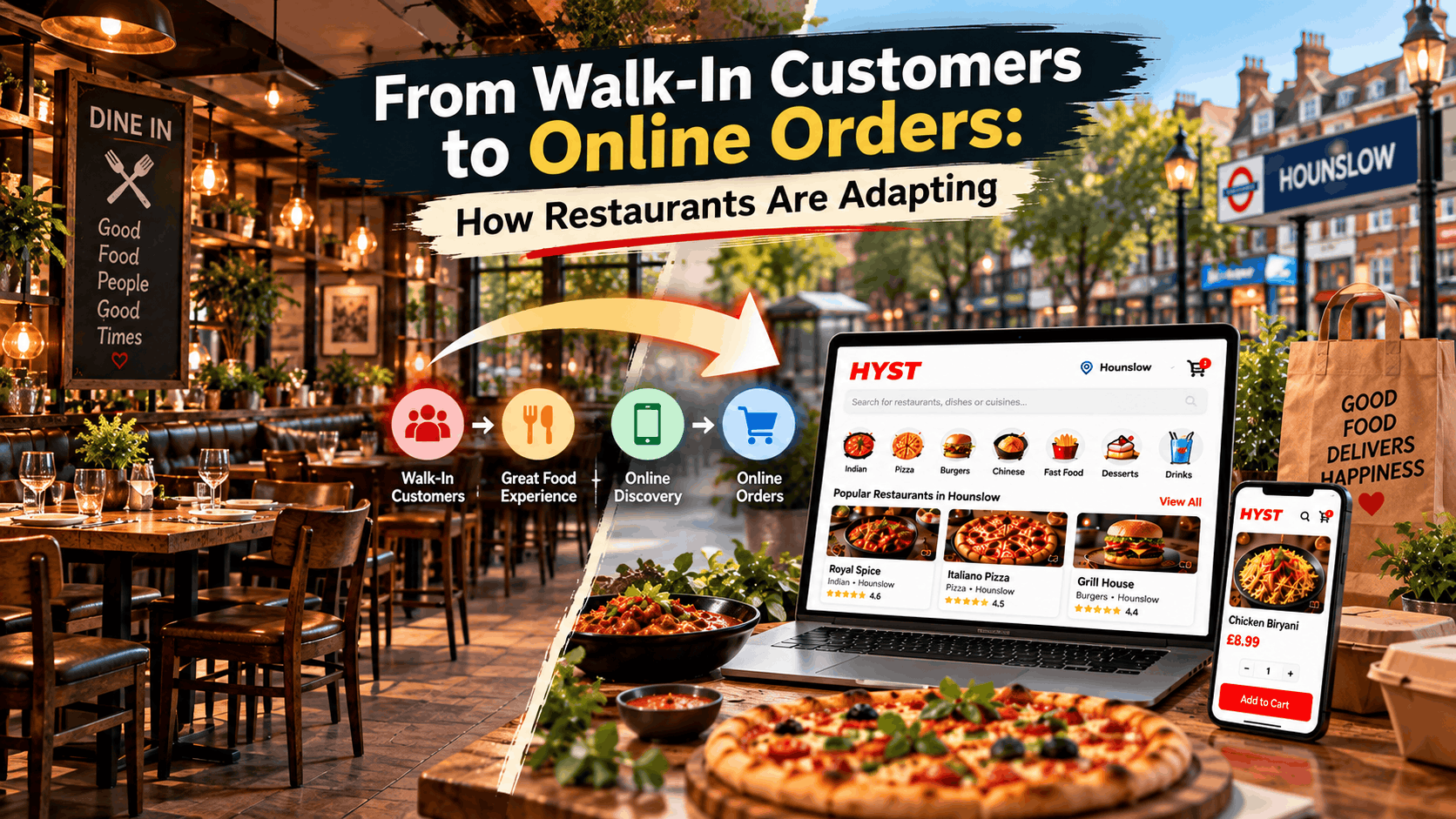
The way people discover restaurants, browse menus and purchase food is changing. For independent restaurants, cafés and takeaways, combining traditional walk-in business with online food ordering has become an important part of adapting to modern customer expectations. Platforms such as HYST's online restaurant ordering platform provide another digital route for customers to discover local restaurants, explore menus and order food online.
Walk-in customers remain important to local food businesses. They support high-street restaurants, visit cafés, collect takeaway meals and introduce friends to their favourite places. However, customers increasingly research restaurants online before deciding where to eat. This creates opportunities for restaurants to reach people who may never have walked past their premises.
For restaurants in Hounslow, London and across the UK, the challenge is to combine the personal experience of a local restaurant with the convenience of digital ordering.
1. Why Restaurant Customer Behaviour Is Changing
Restaurant customers now have multiple ways to discover food businesses. They may find a restaurant through Google Search, social media, online reviews, restaurant websites, recommendations or food ordering platforms.
Someone searching for restaurants near me might compare several menus before choosing a takeaway. Another customer may discover a café on Instagram and visit its website to check the menu. A family might search for Indian restaurants in Hounslow before placing a delivery order.
Relevant customer searches include:
- Restaurants near me
- Restaurants in Hounslow
- Hounslow food delivery
- Hounslow takeaway
- Online food ordering UK
- Order food online
- Indian takeaway Hounslow
- Pizza delivery Hounslow
- Local restaurants near me
- Food delivery near me
- Online restaurant ordering
- Local takeaway delivery
Restaurants should understand these search behaviours and make their business information easy to find online.
2. Walk-In Customers Still Matter
Digital transformation does not mean that restaurants should abandon traditional customers.
Walk-in visitors provide immediate opportunities to deliver excellent service, showcase food quality and build personal relationships. A customer who enjoys a restaurant's atmosphere or service may recommend it to friends or return regularly.
The opportunity is to connect this physical experience with a useful digital experience.
For example, a customer might first visit a local restaurant, enjoy a meal and later look for its menu online. If the restaurant has an accurate digital menu and a straightforward ordering option, that customer may find it easier to order again.
This is how restaurants can connect in-person experiences with online customer journeys.
3. Build a Digital Presence That Supports Restaurant Discovery
A restaurant's digital presence should make it easy for customers to find essential information.
This includes the restaurant name, location, opening hours, food categories, menu prices, contact information and ordering options.
Restaurants should also maintain consistent information across their website, social media profiles and relevant local listings.
For businesses targeting Hounslow customers, useful local content may include Hounslow restaurants, restaurants in Hounslow, local Indian food, pizza delivery in Hounslow and takeaway options near local neighbourhoods.
The objective is not to repeat keywords excessively. It is to answer the questions customers genuinely have when looking for somewhere to eat.
4. Make Online Menus Accurate and Convenient
An online menu is often one of the first places customers interact with a restaurant digitally.
Customers want to see clear dish descriptions, prices, food photographs, available options and relevant dietary information. They also want to know whether a dish is available before placing an order.
Restaurants should regularly review their digital menus to keep information accurate.
HYST's restaurant ordering FAQs explain how participating restaurant partners can manage menu items, pricing and availability.
Accurate menus can reduce confusion, help customers compare options and make the ordering process more straightforward.
5. Make Mobile Food Ordering a Priority
Customers often search for food while travelling, taking a break or relaxing at home. A restaurant's ordering experience should therefore work well on smartphones.
A good mobile ordering journey should allow customers to:
- Find the restaurant quickly.
- Browse menu categories.
- Read food descriptions.
- Check prices.
- Select add-ons and options.
- Review the basket.
- Understand delivery or collection details.
- Complete payment.
A complicated checkout process can discourage customers from completing an order. Restaurants should remove unnecessary steps and make important information easy to understand.
6. Give Customers a Reason to Order Again
Attracting a new customer is valuable, but encouraging repeat orders can be equally important.
Restaurants can support customer retention through consistent food quality, reliable service, accurate menus, clear communication and convenient ordering.
A customer who already knows a restaurant may be more likely to return when the online ordering experience is familiar and easy to use.
Restaurants should therefore focus on the complete customer journey rather than measuring success only by first-time orders.
7. Understand the Commercial Side of Online Ordering
More online orders do not automatically mean more profit.
Restaurant owners need to consider food ingredients, packaging, payment processing, delivery expenses, marketing costs and any applicable platform fees.
HYST promotes a zero-commission model for participating restaurant partners, although the specific commercial terms depend on each restaurant's agreement. Restaurants can review the HYST restaurant partner programme when evaluating whether the platform suits their business.
A restaurant should compare different ordering channels based on its actual costs, customer reach, operational requirements and retained revenue.
8. Connect Traditional Hospitality With Digital Convenience
The strongest restaurant experiences combine technology with genuine hospitality.
Digital ordering can make menus easier to access and orders more convenient, but the restaurant still needs to deliver good food, dependable service and clear communication.
A local café can use online discovery to attract new visitors. A takeaway can make repeat ordering easier. A family restaurant can use its website to communicate its menu and opening hours.
These approaches support traditional hospitality rather than replacing it.
For further context, restaurants can explore HYST's article about clear online menu pricing and its discussion of how online ordering is changing Hounslow's food scene.
9. Improve Local SEO for Restaurants
Local search engine optimisation can help customers discover restaurants when they are actively looking for food.
Useful local SEO practices include maintaining accurate business details, creating helpful restaurant pages, publishing original local content and ensuring that important information is easy to find on mobile devices.
Restaurant content can target relevant searches such as:
- Best restaurants in Hounslow
- Restaurants near me
- Food delivery in Hounslow
- Hounslow takeaway restaurants
- Local food delivery
- Indian restaurants in Hounslow
- Order takeaway online
- Independent restaurants in London
These phrases should match the restaurant's real location, menu and service area. Accurate, useful content is more valuable than creating multiple pages with nearly identical text.
10. Prepare for the Future of Restaurant Ordering
Restaurants do not need to adopt every new technology immediately. Instead, they should identify the tools that solve genuine customer or operational problems.
This might mean improving the mobile menu, updating food photographs, making online prices clearer, introducing online ordering or reviewing the cost of existing delivery channels.
The best strategy depends on the restaurant's size, customer base, cuisine, location and available resources.
Restaurants should also review the applicable HYST terms and conditions before making decisions about its commercial model.
Conclusion
The move from walk-in customers to online orders is not an either-or decision. Traditional hospitality and digital convenience can work together.
For independent restaurants in Hounslow and across the UK, a strong digital presence can help people discover the business, explore the menu and place orders more conveniently. Meanwhile, great food, reliable service and a recognisable local identity remain essential to customer loyalty.
The practical approach is simple: make the restaurant easy to find, keep its information accurate, provide a smooth ordering experience and give customers a reason to return.
By combining local hospitality with useful digital tools, restaurants can adapt to changing customer expectations while continuing to serve the communities that support them.