Explore the Flavours of North-East Indian Food: Momos, Thukpa and Regional Specialities
Indian cuisine is wonderfully diverse, and North-East Indian food deserves a special place in every food lover's culinary journey. From steaming bowls of noodle soup and flavourful dumplings to distinctive regional dishes prepared with local ingredients, the food traditions of Northeast India offer a fascinating combination of textures, aromas and tastes. For customers in Hounslow and across West London who want to explore Indian food beyond familiar favourites, HYST's online food ordering platform is a convenient place to begin discovering local restaurants and browsing available menus.
The Northeast is not a single, uniform food culture. It includes states such as Assam, Arunachal Pradesh, Manipur, Meghalaya, Mizoram, Nagaland, Sikkim and Tripura, each with its own culinary traditions and community influences. Ingredients, cooking methods and flavour preferences differ across the region, making North-East Indian cuisine an exciting subject for anyone who enjoys discovering new dishes.
Whether you are interested in momos, thukpa, regional meat dishes, vegetable preparations or traditional snacks, learning about these foods can help you choose your next meal with greater confidence.
What Makes North-East Indian Cuisine Unique?
North-East Indian cuisine reflects the region's geography, climate, agricultural traditions and cultural diversity. Depending on the community and location, meals may feature rice, seasonal vegetables, herbs, fermented ingredients, fish, meat, bamboo shoots and locally used spices.
Some dishes are known for their warming broths, while others are appreciated for their crisp texture, savoury fillings or distinctive preparation methods. Fermentation, steaming, boiling, roasting and frying are used in different regional food traditions.
Rather than assuming that all North-East Indian food tastes the same, it is useful to explore individual dishes and their origins. A noodle soup associated with Himalayan food traditions offers a different experience from a rice-based Assamese meal or a regional preparation from Nagaland or Manipur.
For diners searching for North-East Indian food in London, Northeastern Indian cuisine, momos near me or regional Indian food in Hounslow, this diversity provides plenty of opportunities to discover something new.
1. Momos: A Popular Favourite for Food Lovers
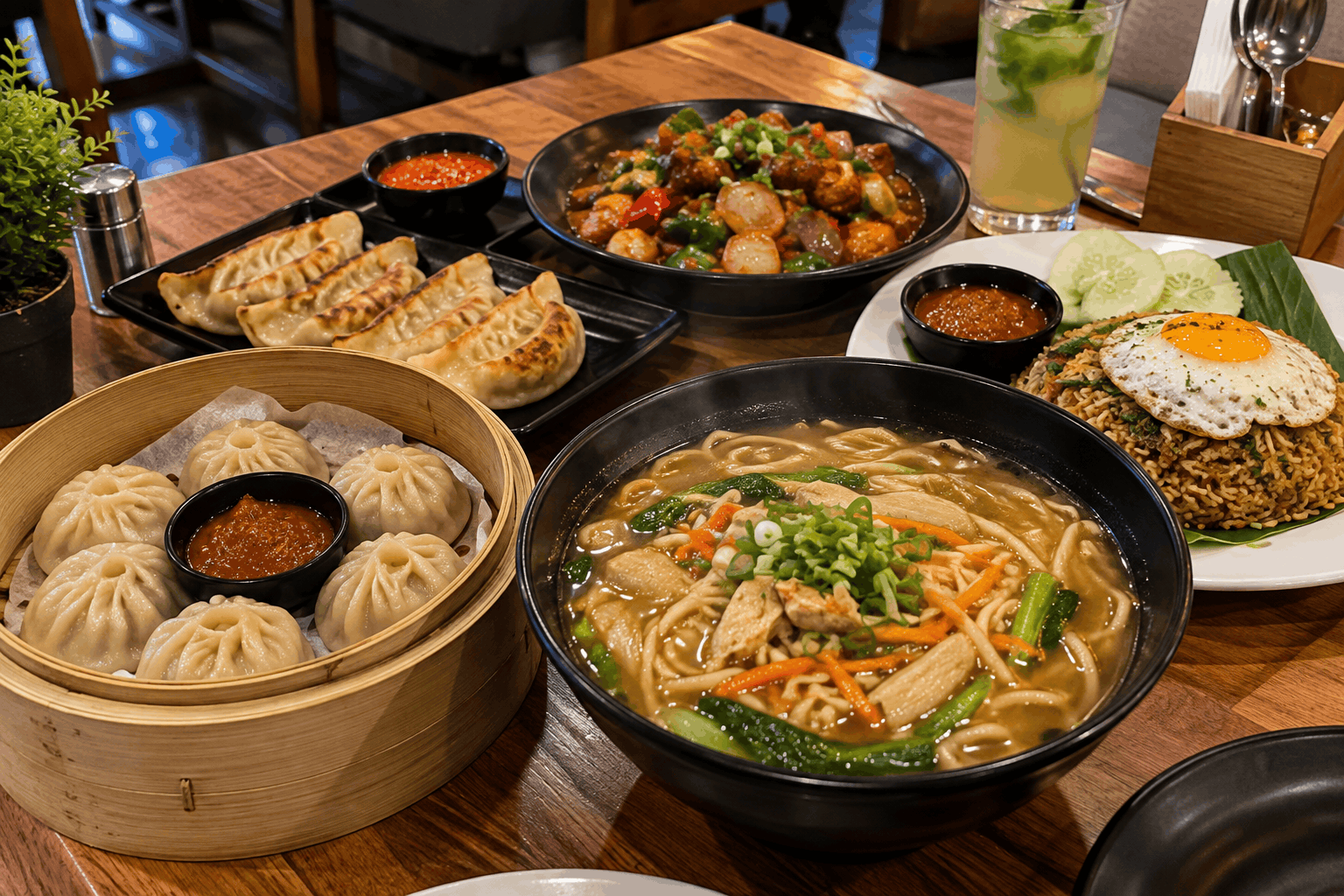
Momos are dumplings that have become widely enjoyed across India, including in many North-Eastern communities. They are commonly made by wrapping a filling in dough and cooking the dumplings by steaming or other methods, depending on the variety.
Vegetable momos may contain ingredients such as cabbage and other vegetables, while non-vegetarian versions may include chicken or other meats, depending on the restaurant and regional tradition.
One reason momos are so popular is their versatility. They can work as a snack, a starter or part of a larger meal. They are often served with a spicy chutney or dipping sauce that adds another layer of flavour.
Customers may come across steamed momos, fried momos and different filling combinations on restaurant menus. However, these variations should not be treated as identical: the ingredients, shape, texture and accompaniments can differ considerably.
When ordering momos online, check the filling, cooking method, portion size and any available allergen information. This is particularly important for customers who have dietary restrictions or prefer vegetarian food.
For background on regional food traditions, the Government of India's Incredible India food and cuisine guide discusses foods including momos, thukpa and sha phaley in the Darjeeling context.
2. Thukpa: A Comforting Bowl of Noodle Soup
Thukpa is a warming noodle soup associated with Tibetan food traditions and enjoyed in parts of Northeast India. It can be especially appealing when you want a filling meal served in a bowl rather than a dry snack or a fried dish.
Depending on the recipe, thukpa may combine noodles, vegetables, broth, herbs and spices. Some versions include chicken or other meat, while vegetarian versions can use vegetables and a vegetable-based broth.
The appeal of thukpa lies in the combination of soft noodles, hot broth and savoury ingredients. It can be a comforting option for lunch or dinner, particularly for people who enjoy noodle soups and meals with a warming, gently spiced flavour.
Different restaurants may prepare thukpa in different ways. Broth richness, chilli intensity, noodle type and vegetable selection can vary, so it is worth reading the menu description before placing an order.
If you enjoy exploring Northeastern Indian noodle soup, vegetarian thukpa, chicken thukpa or Indian Himalayan cuisine, this dish can be a useful starting point for discovering the region's food traditions.
3. Sha Phaley: A Crisp, Stuffed Regional Speciality
Sha phaley is a stuffed bread or pastry associated with Tibetan cuisine and found in parts of the wider Himalayan region, including Darjeeling. It typically combines a dough exterior with a savoury filling and is cooked to develop a crisp outer layer.
The filling may contain meat and aromatics, although ingredients and versions differ. Some preparations are served with chutney, curry or other accompaniments.
Its combination of a crisp exterior and a savoury centre makes sha phaley an interesting option for customers who enjoy dumplings, stuffed snacks and dishes with contrasting textures.
It is important to remember that regional dishes often have several variations, and the ingredients offered by one restaurant may not be the same as those served elsewhere. Customers should confirm the filling and preparation method on the menu.
For anyone interested in discovering Himalayan regional food, sha phaley illustrates how local culinary traditions can offer alternatives to more widely recognised Indian snacks.
4. Explore Rice-Based Meals and Regional Ingredients
Rice plays an important role in the food traditions of many North-Eastern communities. It can be served as a staple alongside vegetables, fish, meat, herbs and other regional preparations.
However, rice-based meals are not identical across the region. Ingredients, seasoning and cooking techniques depend on local traditions and the particular dish being prepared.
Some meals focus on simple combinations of rice and savoury accompaniments, while others feature more complex preparations involving meat, fish, vegetables or fermented ingredients.
For customers who prefer a complete meal rather than a snack, regional rice dishes can be a satisfying option. When exploring a restaurant menu, look for descriptions that explain the main ingredients and preparation style.
If you are discovering this cuisine for the first time, consider choosing one familiar component alongside a new dish. For example, a rice-based meal with an unfamiliar regional side can be an accessible way to explore new flavours without ordering an entirely unfamiliar combination.
5. Bamboo Shoots, Fermented Foods and Distinctive Flavours
Bamboo shoots and fermented ingredients feature in some North-Eastern culinary traditions, although their use varies by state, community and dish.
These ingredients can contribute distinctive aromas, textures and flavours. Fermentation can produce tangy or savoury notes, while bamboo shoots may add a particular texture to a preparation.
For people accustomed to more familiar restaurant curries, these ingredients can provide a different experience. They also demonstrate how regional cooking is influenced by local food resources and traditional methods.
Not every North-East Indian dish contains bamboo shoots or fermented ingredients, and the presence of these ingredients should never be assumed from a dish's regional label alone.
Customers who are curious about these flavours should read the menu carefully or ask the restaurant for clarification. This is especially useful when an ingredient has a strong flavour or when dietary requirements need to be considered.
6. Regional Meat, Fish and Vegetable Preparations
North-East Indian cuisine includes a broad range of meat, fish and vegetable dishes. The ingredients and cooking methods vary, reflecting the diversity of communities and food traditions across the region.
Some preparations focus on the natural flavour of the main ingredient, while others use herbs, chillies, fermented ingredients or regional seasoning to create a distinctive taste.
Vegetarian diners can also explore dishes built around seasonal vegetables, rice and other plant-based ingredients. However, the suitability of a particular dish depends on its actual ingredients and preparation method rather than its name alone.
When ordering online, check whether the menu clearly identifies vegetarian and non-vegetarian options. If you have strict dietary needs, confirm ingredients and possible cross-contact with the restaurant before ordering.
The best way to discover a cuisine is to approach each dish on its own terms. A vegetable preparation from one community may taste very different from a meat dish from another, even when both are described broadly as North-East Indian food.
7. Why North-East Indian Food Is Worth Exploring in Hounslow
Hounslow and the wider West London area bring together people with different culinary backgrounds and food preferences. For local customers, this creates an opportunity to explore a wider range of cuisines through nearby restaurants and takeaway menus.
Trying regional dishes can also be a welcome change from ordering the same meals every week. A customer who usually chooses curry or biryani might enjoy discovering steamed momos, a bowl of thukpa or another regional speciality.
When searching for North-East Indian food in Hounslow, momos in West London, thukpa near me, regional Indian takeaway, or Indian food delivery in Hounslow, focus on the actual dishes offered by each restaurant rather than assuming every Indian restaurant serves the same cuisine.
The local food landscape continues to evolve as customers explore different cuisines and businesses develop their online presence. You can read more about the wider local context in How Online Ordering Is Changing Hounslow's Food Scene.
8. How to Choose the Right Dish When Ordering Online
Trying an unfamiliar cuisine becomes easier when the menu provides clear information. Before ordering, consider the following:
Read the dish description. Look for the main ingredients, cooking method and accompaniments.
Check the portion size. A starter, snack and main meal may be designed for different appetites.
Consider the spice level. If the menu does not explain the heat level, ask the restaurant rather than assuming a dish will be mild.
Review dietary details. Vegetarian labels and ingredient information should be accurate, especially for customers with allergies or dietary restrictions.
Compare the available options. You may prefer steamed dumplings for a lighter snack or noodle soup for a more substantial meal.
Check delivery and collection information. Availability and service areas depend on the restaurant and ordering arrangement.
A well-organised digital restaurant menu can make it easier to compare dishes and understand what is included before adding an item to your basket.
9. Discover More Food Options Through Online Ordering
Online ordering can help customers discover restaurants and menu items without visiting every business in person. It can also make it easier to review descriptions, compare options and decide what to eat.
For a better experience, customers should use current menu information, verify prices and check that the selected restaurant serves their area. Dish availability, delivery arrangements and individual restaurant terms may vary.
If you want to explore different cuisines, browse the HYST online ordering website and review the restaurants and dishes currently listed for your location. You can also consult the HYST FAQs for general platform information.
Restaurant owners can use digital menus to present their food more clearly, keep information current and help customers understand their offerings. Businesses interested in listing their restaurant can review the HYST restaurant partner programme and check the applicable commercial terms and service features.
10. Bring New Flavours to Your Next Meal
Exploring North-East Indian cuisine is about discovering the variety of India's regional food traditions rather than searching for one single flavour profile.
Momos offer a versatile dumpling experience, thukpa provides a comforting noodle soup, and sha phaley introduces a crisp stuffed speciality. Rice-based meals, vegetables and region-specific ingredients offer further opportunities to explore different culinary traditions.
For customers in Hounslow and West London, browsing local menus can be a practical way to find new dishes and make more adventurous food choices.
Whether you are searching for momos near me, thukpa takeaway, North-East Indian cuisine in London, or regional Indian food delivery, take the time to read the menu, check the ingredients and choose a dish that suits your preferences.
A new cuisine can begin with one simple order—and that first experience may introduce you to a whole new range of flavours.
Conclusion: Discover the Diversity of North-East Indian Food
North-East Indian food offers a rich and varied culinary landscape shaped by local ingredients, regional traditions and community influences. From dumplings and noodle soups to rice-based meals and distinctive regional preparations, the cuisine offers plenty to explore.
For diners looking to discover something different in Hounslow, the best starting point is a clear menu and a willingness to try new dishes. Understanding the ingredients, preparation method and portion size can make the experience more enjoyable and help you choose with confidence.
Explore the available menus, discover local restaurants and make your next meal an opportunity to experience the diversity of Indian cuisine.
SEO Keyword Ideas
Primary keywords: North-East Indian food, Northeast Indian cuisine, North-Eastern Indian dishes, North-East Indian food in London, regional Indian food.
Supporting keywords: momos, steamed momos, fried momos, thukpa noodle soup, vegetarian thukpa, sha phaley, Himalayan cuisine, regional rice dishes, bamboo shoot dishes, traditional Northeastern food, Indian regional cuisine.
Local SEO keywords: North-East Indian food in Hounslow, momos in Hounslow, thukpa in West London, Indian food delivery Hounslow, regional Indian takeaway London, momos near me, thukpa near me, Hounslow takeaway restaurants.
Long-tail keywords: where to find North-East Indian food in London, what to order when trying Northeastern Indian cuisine, best dishes to explore from Northeast India, order momos online in Hounslow, where to find thukpa in West London, regional Indian food delivery near me, traditional Himalayan dishes to try, discover North-East Indian cuisine through local restaurants.